


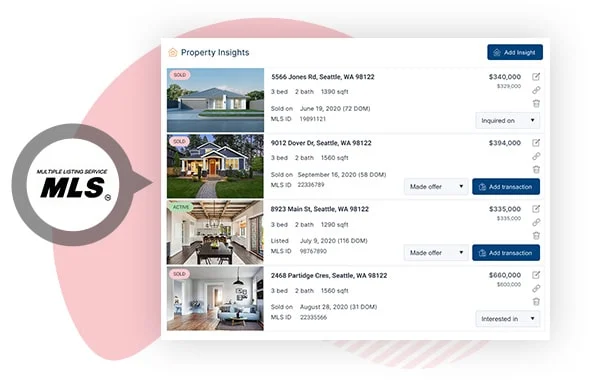
In Toronto's changing real estate market in 2026, when forecasts suggest some modest improvement, with the national average home sales forecast to increase by around 5 - 8 percent (driven in large part through Ontario in addition to B.C. ) Average prices could have slight declines or slow growth in the face of lingering uncertainty about the economy favorable conditions for buyers, and condominium softness. In the Greater Toronto Area (GTA) is highly competitive, with an increase in listings and sceptical buyers creating opportunities for realtors who are proactive. Your success is not just about the display of MLS listings. It's about using MLS integration that feeds directly into your CRM to facilitate seamless lead capture by sellers and management.
MLS Integration that goes beyond listing CRM Sync for Leads from Sellers in Toronto 2026 examines how sophisticated sync tools transform inactive MLS information into active seller pipelines. For Toronto realtors that are part of Toronto Regional Real Estate Board (TRREB). Toronto Regional Real Estate Board (TRREB) Integration of MLS beyond the basic IDX display into CRM workflows enables live lead nurturing in real time, automated follow-ups, and better efficiency in a market that is shifting towards the balance.
Understanding Toronto's 2026 Real Estate Market and Seller Lead Challenges
Toronto's housing market for 2026 is expected to see a moderate improvement following a slowdown in 2025 with CREA expecting national sales growth to around 5.1 percent, with Ontario getting stronger gains. However, the challenges remain in the form of a possible price decline (forecasts vary between -3.5 percent to modest increases) and a higher inventory and other economic variables like the uncertainty of trade and interest rates make many homeowners in limbo about selling.
Leads from sellers in this market tend to be "hidden"--homeowners looking at market trends, comparing comps or valuing their properties with no any immediate intention. Traditional methods fail Digital tools which sync MLS activity with CRM record these signals earlier, transforming the web into listings.
The Limitations of Basic MLS/IDX Display in 2026
Standard IDX provides the latest TRREB inventory on your website and attracts buyer attention, but potential sellers are not uncovered as data remains siloed. People searching for local statistics or sold comparables indicate intent to sell, however with no CRM sync, follow-up is based on manual entry and could result in loss of leads in a fast-moving GTA market.
What True MLS-CRM Sync Means for Seller Leads
Advanced integration Advanced integration pulls MLS information (listings and sales history and market statistics) directly to your CRM system, enhancing profiles and triggers actions. If a user is looking at sold comps in a particular area such as North York or Scarborough, the system records it as a potential seller, tags them with a tag sellers, and then initiates automated nurture, including personalized valuations or market updates emails.
This sync is in compliance to TRREB as well as CREA guidelines, which ensures the data's accuracy while also ensuring privacy compliance with Canadian laws.
Key Benefits of MLS-CRM Sync for Toronto Realtors
- Live Lead Enhancement The software automatically adds property listings that have been viewed on MLS in contact record, creating complete buyer intent profiles.
- Automated Seller Nurturing Set workflows to run drip campaigns which are based on MLS behaviour, for example "You viewed recent sold homes in Etobicoke--here's a free valuation."
- Better Conversion Rates Early recognition of sellers with motivation in a market that favors buyers accelerates the process of listing.
- Centralized Management There's no duplicate data entry. All interactions (website email, calls) all converge into one dashboard for CRM.
- Conformity and Efficiency seamless sync complies with MLS rules while reducing time for Toronto agents.
In 2026's booming market this capability will give you an advantage over agents who are stuck with tools that are not connected.
Essential Features to Look for in MLS-Integrated CRM Solutions
Prioritize platforms that offer:
- Bidirectional HTML0 Bidirectional Sync: MLS updates (new listings and status changes) reflect in CRM. Notes from CRM enrich contacts linked to MLS.
- Seller-focused Triggers Alerts for views of sold information, expired listings or the use of valuation tools.
- Automation tools Send SMS or email schedules, reminders for tasks and segmentation based on GTA neighborhood.
- Analytics Dashboard Monitor lead from sellers, sources, funnels for conversion and the return on investment from sync-driven marketing campaigns.
- Mobile Access Mobile Access: Management on-the-go for open houses or showings.
- TRREB Compatible Integration A reliable connection, rule-adherent with Toronto's MLS.
These tools transform data into profitable sales opportunities.
How to Implement MLS-CRM Sync for Seller Lead Generation
- Choose a compatible platform with TRREB native support.
- Data fields to map: Ensure that market statistics, sold comps and flow of activity for users into CRM.
- Automate sales-specific processes Label high-intent behaviors or launch times.
- Promote seller tools such as home evaluations and market report as well as comp request requests, on the IDX pages.
- Monitor and improve Utilize analytics to improve triggers and the content that is appropriate specifically for Toronto sub-markets.
A well-planned setup can provide regular leads from sellers, without manual effort.
Automating the process of generating leads for sellers using Synced Data
Automation is essential to 2026's tense market. The synchronization of systems allows:
- Drip campaigns that include hyperlocalized contents (e.g., "2026 GTA Seller Guide").
- Follow-ups that are personalized based on MLS interactions.
- Re-engagement of leads that are not active via scheduled market updates.
This keeps causes from cooling and places you as a trusted expert.
Evaluation of the ROI of the MLS-CRM Integration in Toronto
Monitor metrics such as lead from sellers, volume appointment times for listing appointments derived from data synced with other sources, the conversion rate and the amount of time saved. Agents claim to see efficiency improvements of 20-40% and more listings when using connected setups.
Regular reviews aid in adjusting strategies in the context of 2026 trends, such as the possibility of inventory spikes.
Why Web4Realtor Excels for MLS-CRM Sync in Toronto 2026
Web4Realtor offers a comprehensive solution designed specifically to Canadian realtors. It includes seamless integration of MLS/IDX (including TRREB compliant) and a powerful CRM to track leads as well as pipeline administration, automatic marketing via email, as well as the ability to capture leads. Custom IDX websites showcase listings, while processing data into the CRM to create enriched seller profiles as well as automated nurturing.
Created for Toronto-area realtors (with offices located in Markham), Web4Realtor combines an intuitive design, SEO optimization, as well as automation to help manage and generate leads from sellers effectively. This integrated approach will help agents succeed in 2026's growing but highly competitive GTA market.
For Toronto in 2026 MLS Integration beyond listing--through a robust CRM sync is crucial to getting leads from sellers in a timely manner. With tools that integrate data and automate workflows you will be able to increase the number of listings and a steady growth. Take a look at Web4Realtor to find out how seamless MLS-CRM synchronization can improve your seller pipeline today.