


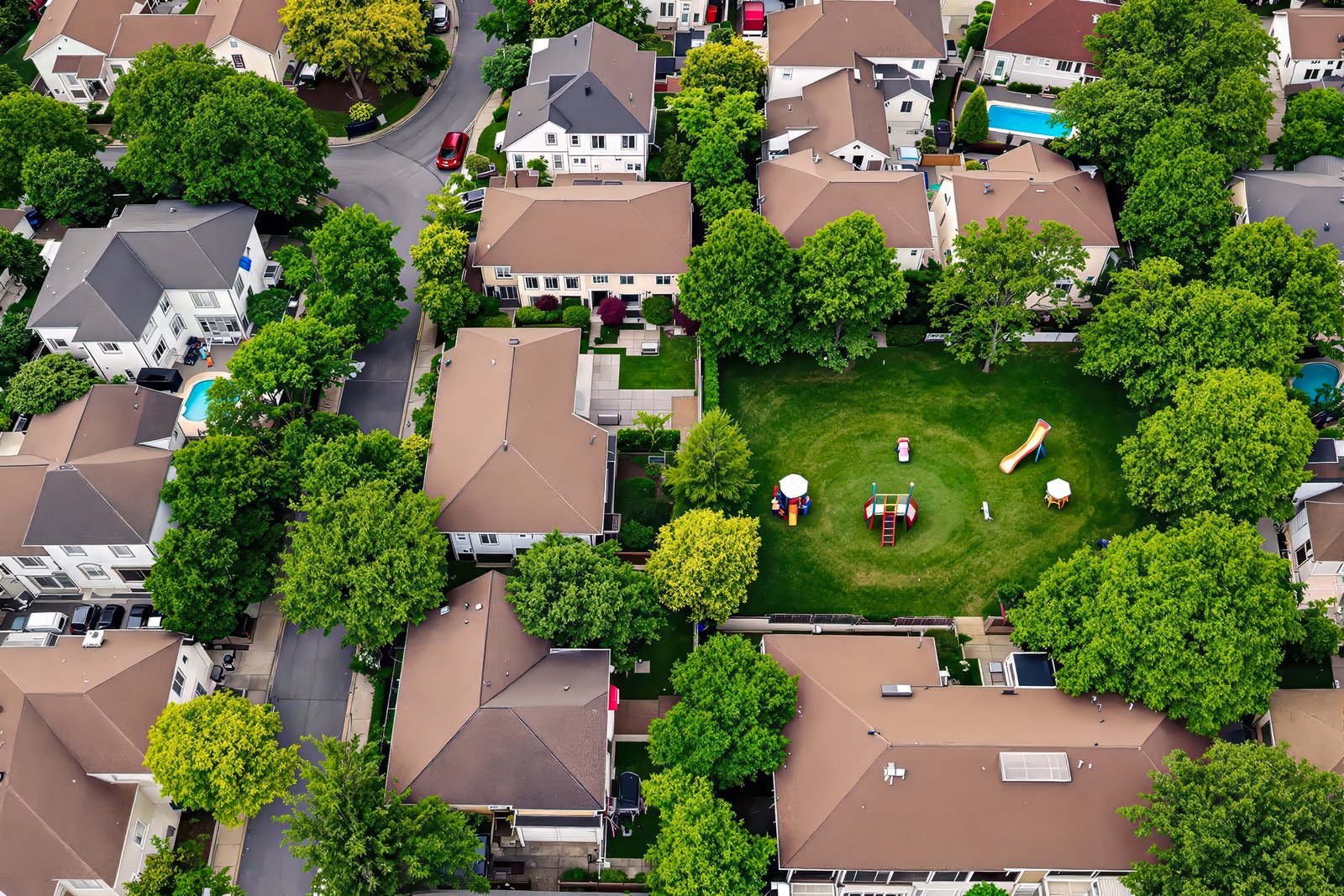
The Case for Drone Photography
Aerial footage gives buyers a perspective that ground-level photography simply cannot provide: the size of the lot, the relationship between the property and its surroundings, the distance to a park or waterfront feature, the layout of a large estate or rural acreage. For certain property types, it is not a nice-to-have — it is the most important marketing asset in the listing package.
Buyers shopping remotely — which is common in Canada's market, where a Toronto buyer purchases in Barrie or a Vancouver buyer buys in Kelowna — rely on aerial footage to orient themselves to a property they have never visited in person. A 90-second drone video can answer questions that dozens of interior photos cannot.
When Drone Photography Is Worth the Cost
Drone photography earns its cost consistently for: waterfront properties (lake, river, ocean frontage), rural and agricultural land, large estate lots over one acre, properties with exceptional views, new builds in planned communities where showing the neighbourhood context matters, and commercial properties. In these cases, the aerial footage is often the primary reason a buyer books a showing or makes an offer sight unseen.
A $400 drone shoot on a $2M waterfront property is a rounding error in the marketing budget. A $400 drone shoot on a standard semi-detached in a suburban neighbourhood is a cost that rarely changes the outcome.
When Drone Photography Is Not Worth It
Interior photography and a compelling listing description will almost always do more for a standard urban or suburban home than aerial footage. If the property does not have a standout feature that is visible from above — an interesting lot, a view, proximity to a natural landmark — a drone video of a roof and a street does not move buyers.
In dense urban markets like downtown Toronto, Vancouver's West End, or Montreal's Plateau, flight restrictions and limited airspace mean drone footage is often impractical or legally complicated. An RPAS licence is required in Canada for commercial drone use — any photographer you hire should be Transport Canada certified.
What It Actually Costs
A professional drone package in Canadian markets typically runs between $250 and $600 depending on location, package scope, and editing. Basic packages include a set of aerial stills and a short edited video clip. Full packages may include a cinematic walkthrough combined with interior photography. Some real estate photography studios bundle drone into their top-tier listing package, which can be cost-effective if you are already investing in professional interior photography.
Avoid the temptation to hire an unlicensed drone operator to save $100. The liability exposure from an unlicensed commercial drone operation — particularly near residential areas, airports, or controlled airspace — is not worth the saving.
Practical Checklist Before Booking
Before you book a drone photographer, confirm: the property type genuinely benefits from aerial footage, the neighbourhood is not in restricted airspace (check Nav Canada's drone flight map), the weather forecast allows for the shoot date, and the photographer holds a valid Transport Canada RPAS pilot certificate for advanced operations if the shoot requires flying beyond visual line of sight or in controlled airspace.
Drone footage combined with a strong IDX listing page and well-written property description creates the full package that makes buyers confident enough to book a showing. Each element does a different job — aerial footage shows context, interior photography shows condition, the description creates desire.